
28 Surprising Facts You Should Know about Quantum Sensors
Quantum sensors are commercially available, and the market is growing rapidly. The timeline for quantum sensing varies by application, but the consensus among researchers and industry analysts is that several categories are already transitioning from research to deployment. Commercial quantum sensors can be found at Vector Atomic Inc., Q-CTRL, and Infleqtion.
Quantum sensors provide a step-function in performance over classical sensors and are ideal for navigation, medical imaging, aerospace, telecommunications, and geophysics because of their unique sensing capabilities.
Most quantum sensors can operate at room temperature, but they may require lasers to cool atoms. Note: cryogenic cooling is used in laboratory environments to achieve better results, i.e., less error.
Most types of quantum sensors use lasers to interact with atoms and to make measurements. In many cases, the lasers are small enough to package within a fieldable device, i.e., micro-lasers.
The majority of fieldable quantum sensors use one or more of the following quantum implementations: Nitrogen Vacancy (NV)-center in diamonds or silicon carbide (SiC), atomic vapor, cold cloud, or single atoms.
The majority of fieldable quantum sensors use lasers or microwaves to manipulate and read the quantum particles.
The most common measured properties of quantum sensors include acceleration, chemical concentrations, electric fields, frequency, gravitational forces, magnetic fields, pressure, rotation, and temperature.
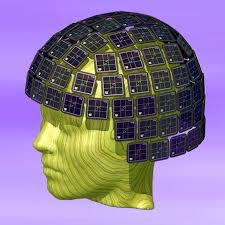
Quantum sensors are the next frontier of sensing. They offer exciting, often unimaginable capabilities such as brain-computer interfaces, sensors capable of detecting hidden tunnels, precision navigation without GPS, medical devices capable of imaging real-time neuron activity in living organisms, LIDAR capable of detecting objects around corners, non-invasive inspection of materials to identify weak points, and detection of stealth aircraft.
Quantum sensors leverage superposition, entanglement, discrete states, and quantum coherence to extract information from individual atoms, allowing the sensors to be exponentially more accurate than classical sensors.
Quantum sensors are an order of magnitude (~10x) more sensitive to environmental changes than classical sensors thanks to the sensitivity of quantum states.
Quantum entanglement links the states of two or more quantum particles, even across distances. When one particle responds to a magnetic field or gravitational wave, its entangled partner reflects that change instantly. This correlation enables sensors to filter noise and improve signal clarity beyond what isolated measurements could achieve.
Quantum superposition allows a particle to exist in multiple states simultaneously, increasing the amount of measurable information. This means a single quantum particle can effectively explore multiple measurement outcomes at once, improving precision through quantum interference patterns that amplify the correct signal.
Today’s quantum sensors have their roots in well-established techniques such as magnetic resonance imaging (MRI), which is founded on similar quantum mechanical principles. In an MRI, individual nuclei are used as qubits, which report on their surrounding environment. Similarly, most modern quantum sensing uses either a nuclear or electronic ‘spin’ as a qubit.
When atoms are exposed to a magnetic field, their energy levels shift, providing a measurement of the external force's magnitude and direction. A quantum sensor can detect these shifts using lasers and interpret them to measure the field’s strength and direction.
Quantum sensors can take many forms. They’re essentially systems in which some particles are in such a delicately balanced state that they are affected by tiny variations in the fields they are exposed to. These can take the form of neutral atoms, trapped ions, spin qubits, flux qubits, photons, condensed matter, single electrons, and certain solid-state devices.
Quantum states are often read by shining a laser on the atom and measuring the light it scatters, or by analyzing the phase of entangled photons. The readout reveals how much the quantum state has shifted, which in turn reveals the strength of the external force. Because the quantum system is so sensitive, even tiny forces produce detectable changes.
Atomic clocks are the most mature quantum sensors, with systems already operating in GPS satellites, telecommunications networks, and national timekeeping laboratories.
Quantum magnetometers are in field trials for medical imaging, mineral exploration, and defense applications. Companies like Cerca Magnetics and Infleqtion are developing portable systems that operate at room temperature, expected to reach broader commercial availability within the next three to five years.
Quantum gravimeters are being tested for infrastructure monitoring and geophysical surveys. Several companies, including Atomionics and Nomad Atomics, offer commercial prototypes, though prices remain high and adoption is limited to specialized applications.
Quantum inertial sensors for navigation are under development. Vector Atomic’s sensors are already in defense programs. Widespread commercial deployment in autonomous vehicles or aviation will take longer, likely five to ten years, as costs decline and regulatory frameworks adapt.
Quantum sensing systems are already used in niche applications for gravitational changes beneath the earth’s surface as a proxy for volcanic activity for example.
Current quantum sensors range from tens of thousands to hundreds of thousands of dollars, depending on the application and level of precision required. Atomic clocks and gravimeters used in research can exceed $500,000. However, as manufacturing scales and companies develop more compact systems, prices are expected to fall significantly – potentially by an order of magnitude over the next decade – making quantum sensors accessible to a wider range of industries.
Adoption of quantum sensors over the next several years will focus on hybrid solutions that combine classical processing with quantum sensors. These systems will make navigation safer, materials stronger, and measurements more reliable. They will also support new levels of accuracy in healthcare and defense.
For quantum sensors to achieve broad commercial impact, further development is needed to reduce device size, weight, and power and to improve fabrication cost-efficiency.
The first tabletop-size NV-diamond products for microelectronics analysis are already available.
Many quantum sensors still require bulky vacuum chambers, laser systems, and magnetic shielding to maintain quantum coherence. While laboratory prototypes demonstrate impressive performance, translating that into a compact, ruggedized device suitable for fieldwork remains a challenge. Companies like Atomionics and Nomad Atomics are making real progress on portable systems, and some atomic magnetometers now fit in a shoebox, but further miniaturization is essential for widespread adoption.
The same properties that make quantum sensors so precise also make them fragile. Temperature fluctuations, vibrations, and stray electromagnetic fields can disrupt quantum coherence, degrading performance. Companies like Q-CTRL are developing better control algorithms and error-mitigation techniques specifically designed for operating quantum sensors in uncontrolled environments, for example on a moving vehicle, underground, or in a hospital.
Because quantum sensors are so sensitive, they suffer from a small dynamic range and will saturate if there are large variations in measurement values. As a result, quantum sensors may take longer to perform measurements than other technologies.


References
BAE Systems, "What is Quantum Sensing," [Online]. Available: https://www.baesystems.com/en-us/definition/what-is-quantum-sensing. [Accessed 8 March 2026].
M. J. Biercuk and R. Fontaine, "The Leap into Quantum Technology: A Primer for National Security Professionals," War on the Rocks, 17 November 2017. [Online]. Available: https://warontherocks.com/2017/11/leap-quantum-technology-primer-national-security-professionals/. [Accessed 8 March 2026].
A. Goetzman, "Meet the Sensor: Quantum Sensors," Connector Supplier, [Online]. Available: https://connectorsupplier.com/what-are-quantum-sensors/. [Accessed 8 March 2026].
D. L. Chandler, "Quantum sensor can detect electromagnetic signals of any frequency," Massachusetts Institute of Technology, 21 June 2022. [Online]. Available: https://news.mit.edu/2022/quantum-sensor-frequency-0621. [Accessed 8 March 2026].
Pittsburgh Quantum Institute, "Quantum Sensing," [Online]. Available: https://www.pqi.org/quantum-research/quantum-sensing. [Accessed 8 March 2026].
C. Wan, "Exploring the quantum triad: Quantum sensing," Bessemer Venture Partners, 11 April 2022. [Online]. Available: https://www.bvp.com/atlas/exploring-the-quantum-triad-quantum-sensing. [Accessed 8 March 2026].
E. Schepers, "An introduction to quantum sensors and the investment opportunities in this space," Verve Ventures, [Online]. Available: https://www.verve.vc/blog/quantum-sensor-investments/. [Accessed 8 March 2026].
Q-CTRL, "Beginner Quantum Sensing," [Online]. Available: https://q-ctrl.com/topics/introduction-to-quantum-sensing. [Accessed 8 March 2026].
M. U. Rehman, "Understanding Quantum Sensing and Its Industrial Potential," Resonance Alliance Inc., 2 March 2026. [Online]. Available: https://thequantuminsider.com/2026/03/02/understanding-quantum-sensing-industrial-potential/. [Accessed 8 March 2026].
H. Gharibyan, "Quantum Sensing and Its Impact on Modern Technology," 18 August 2025. [Online]. Available: https://www.bluequbit.io/blog/quantum-sensing. [Accessed 8 March 2026].
Quantum in South Carolina, "What Are Quantum Sensors and Who Uses Them?," 6 November 2025. [Online]. Available: https://www.scquantum.org/news/what-are-quantum-sensors-and-who-uses-them. [Accessed 8 March 2026].
Kwan-Tek, "Quantum Sensors: Turning quantum principles into real-world precision," [Online]. Available: https://www.kwan-tek.com/technology/quantum-sensors/. [Accessed 8 March 2026].
J. Shepard, "What technologies are used to make quantum sensors?," Sensor Tips, 2 February 2024. [Online]. Available: https://www.sensortips.com/featured/what-technologies-are-used-to-make-quantum-sensors/. [Accessed 8 March 2026].
Hubner Photonics, "Quantum metrology and sensing," 3 March 2021. [Online]. Available: https://hubner-photonics.com/knowledge-bank/quantum-metrology-and-sensing/. [Accessed 8 March 2026].
QuEra, "Quantum Sensing," [Online]. Available: https://www.quera.com/glossary/quantum-sensing. [Accessed 8 March 2026].
T. F. Segawa and R. Igarashi, "Nanoscale quantum sensing with Nitrogen-Vacancy centers in nanodiamonds – A magnetic resonance perspective," Progress in Nuclear Magnetic Resonance Spectroscopy, Volumes 134-135, 2023. [Online]. Available: https://www.sciencedirect.com/science/article/pii/S0079656522000322. [Accessed 8 March 2026].
T. Zhang and G. Pramanik, "Toward Quantitative Bio-sensing with Nitrogen-Vacancy Center in Diamond," ACS Sens, 25 June 2021. [Online]. Available: https://pubmed.ncbi.nlm.nih.gov/. [Accessed 8 March 2026].
National Institute of Standards and Technology, "Quantum Sensors Division," [Online]. Available: https://www.nist.gov/pml/quantum-sensors. [Accessed 8 March 2026].
E. Grant, "Quantum sensing: the quantum technology you’ve never heard of," Cosmos Archive: Physical Sciences, 2 July 2024. [Online]. Available: https://connectsci.au/news/news-parent/2405/Quantum-sensing-the-quantum-technology-you-ve. [Accessed 8 March 2026].
CEA-LETI, "Quantum sensors, measurement devices with unrivaled precision," 31 March 2022. [Online]. Available: https://www.leti-cea.com/cea-tech/leti/english/Pages/What's-On/News/Quantum-sensors-measurement-devices-with-unrivaled-precision.aspx. [Accessed 8 March 2026].
E. Cartlidge, "Quantum Sensors: A Revolution in the Offing?," Opics and Photonics News, September 2019. [Online]. Available: https://www.optica-opn.org/home/articles/volume_30/september_2019/. [Accessed 8 March 2026].
H. Soller and M. Gschwendtner, "Quantum sensing: Poised to realize immense potential in many sectors," McKinsey & Company, 10 June 2024. [Online]. Available: https://www.mckinsey.com/capabilities/tech-and-ai/our-insights/tech-forward/quantum-sensing-poised-to-realize-immense-potential-in-many-sectors. [Accessed 8 March 2026].
Quantum Dynamics LLC, "Q-Diamonds: Diamond-Based Quantum Storage & Processing," [Online]. Available: https://www.quantum-dynamics.org/q-diamonds. [Accessed 8 March 2026].
J. Shepard, "What are the seven types of quantum sensors?," Sensor Tips, 5 February 2024. [Online]. Available: https://www.sensortips.com/featured/what-are-the-seven-types-of-quantum-sensors/. [Accessed 8 March 2026].
X. Rottenberg, "Sensor searches demanding application," Imec, [Online]. Available: https://www.imec-int.com/en/imec-magazine/imec-magazine-february-2019/sensor-searches-demanding-application. [Accessed 8 March 2026].
H. Singh and N. D'Souze, "Room-temperature quantum sensing with photoexcited triplet electrons in organic crystals," 24 February 2025. [Online]. Available: https://journals.aps.org/prresearch/abstract/10.1103/PhysRevResearch.7.013192. [Accessed 8 March 2026].
I. Fadelli, "Quantum sensor based on silicon carbide qubits operates at room temperature," Phys.org, 28 November 2025. [Online]. Available: https://phys.org/news/2025-11-quantum-sensor-based-silicon-carbide.html. [Accessed 8 March 2026].
M. Mattingley-Scott, "Room-Temperature Quantum Can Revitalize Europe’s Semiconductor Industry," EETimes, 17 September 2025. [Online]. Available: https://www.eetimes.com/room-temperature-quantum-can-revitalize-europes-semiconductor-industry/. [Accessed 8 March 2026].
Markets and Markets, "Quantum Sensors Market," [Online]. Available: https://www.marketsandmarkets.com/ResearchInsight/. [Accessed 8 March 2026].
E. Dye, "Quantum Innovators: Leading Companies in Quantum Sensing Technology," EPN Enterprise Podcast Network, [Online]. Available: https://epodcastnetwork.com/quantum-innovators-leading-companies-in-quantum-sensing-technology/. [Accessed 8 March 2026].
Comments